

I love starting my day with a steaming cup of matcha green tea. Read on to learn how to make this energizing, antioxidant-packed drink at home!


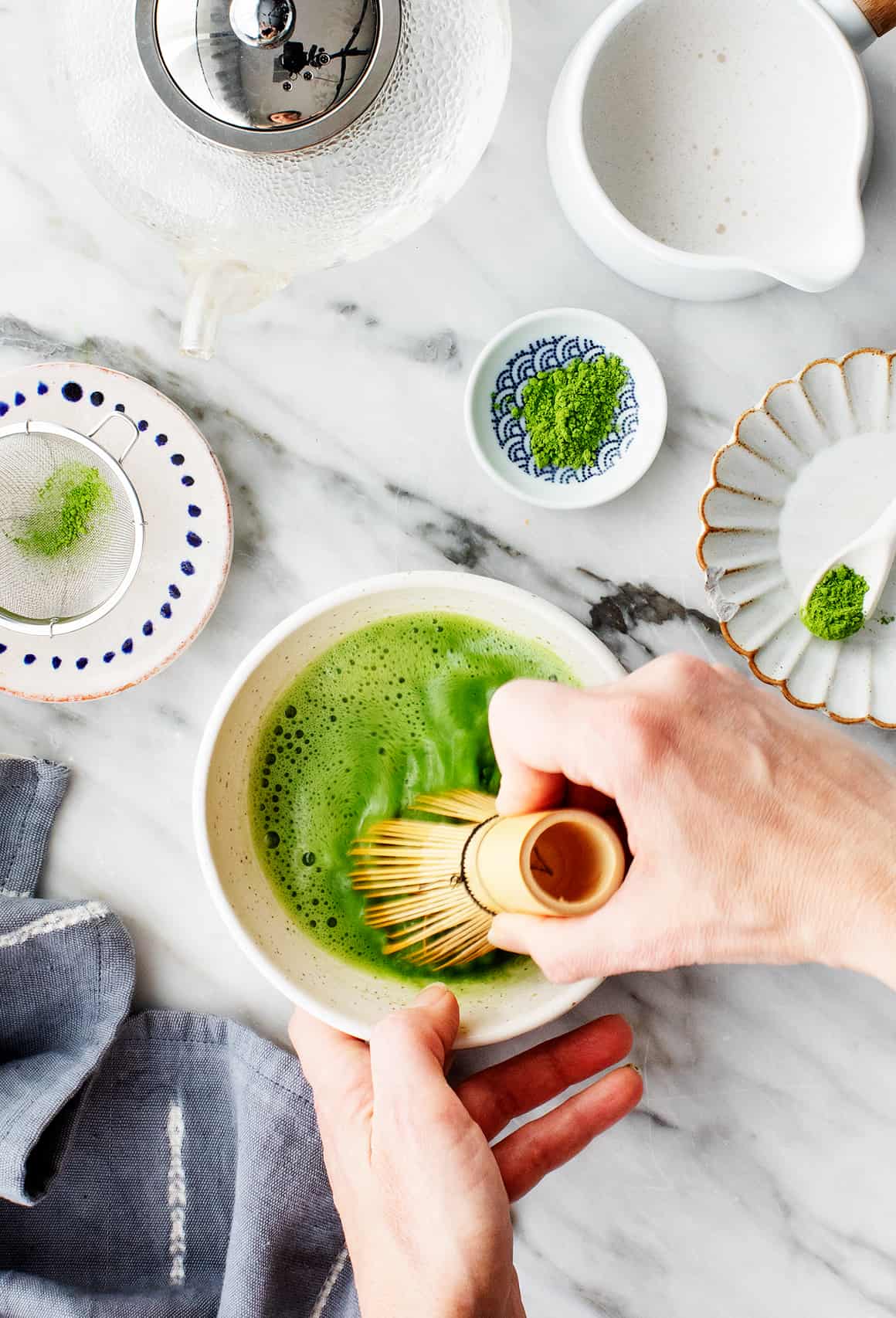
Learn how to make matcha tea! This simple guide will teach you how to make matcha with just green tea powder and water, with the option to add milk to make a latte. This easy recipe creates a frothy, nourishing green tea, and I’ve loved drinking matcha this way since Jack and I took our first trip to Japan years ago. I still make myself a cup almost every morning! To me, it’s the perfect way to start the day. It’s energizing and calming both at once, and above all else, it’s delicious.
What is Matcha?
Matcha is a Japanese green tea powder made from finely powdered dried tea leaves. It has a slightly bitter, vegetal taste and a vibrant green color that comes from the leaves’ high chlorophyll levels, which are a result of the leaves being shade-grown. Matcha has been the cornerstone of traditional Japanese tea ceremonies for centuries.
Health Benefits of Matcha
Regular green tea is already an antioxidant powerhouse, but matcha has even more benefits. Here’s why: when you make other forms of green tea, you steep the leaves in hot water and then discard them. When you make matcha, you whisk the powder into hot water or milk. As a result, you actually consume the entire tea leaf when you drink it! The antioxidants it contains may lower blood pressure, reduce your risk of heart disease, and even boost your metabolism.
Does matcha have caffeine?
Yes, matcha contains caffeine, about 40 to 90mg per teaspoon. While a typical cup has more caffeine than regular green tea, I find that it doesn’t give me a buzzy rush like coffee. It leaves me feeling energized and focused, but still calm.
What Is the Best Matcha Powder?
Buying matcha for the first time can be confusing—there are so many brands, and they vary widely in quality. The most significant distinction is between ceremonial grade and culinary grade matcha:
- Ceremonial matcha is better for drinking. Though it’s typically more expensive, it’s made from the youngest tea leaves and has a mellower, less bitter flavor.
- Culinary matcha has a bolder flavor that can cut through other ingredients in baking recipes like these matcha cookies. It can be a little strong or bitter to drink.
I recently tested out all of the top matcha powders, and I found that my favorite for drinking is Ippodo Tea Ummon. I’ve used it for years, and I love its rich, earthy flavor with only a bit of bitterness. Find more great options at a variety of price points in my guide to the best matcha powders.
Helpful Tips
- Matcha doesn’t last forever. Once you open it, use it within 2 months for the best color and flavor. Buy it in small quantities and store it in the fridge to preserve freshness.
- Add more matcha to taste. I call for a small amount in this recipe, 1/4 teaspoon. This is a great place to start if you’re new to matcha. As you get used to the taste, feel free to use more, up to 1 teaspoon, to create a stronger cup.
- Sweeten to taste. Matcha’s grassy, umami flavor can be an acquired taste. If you’re new to making it or if you’re using a particularly bitter powder, don’t hesitate to add a few drops of maple syrup or honey.

How to Make Matcha Green Tea
You’ll find my full matcha green tea recipe with measurements below, but because there are a few tricks to making matcha, I wanted to break it down step by step. Here’s what you need to do:
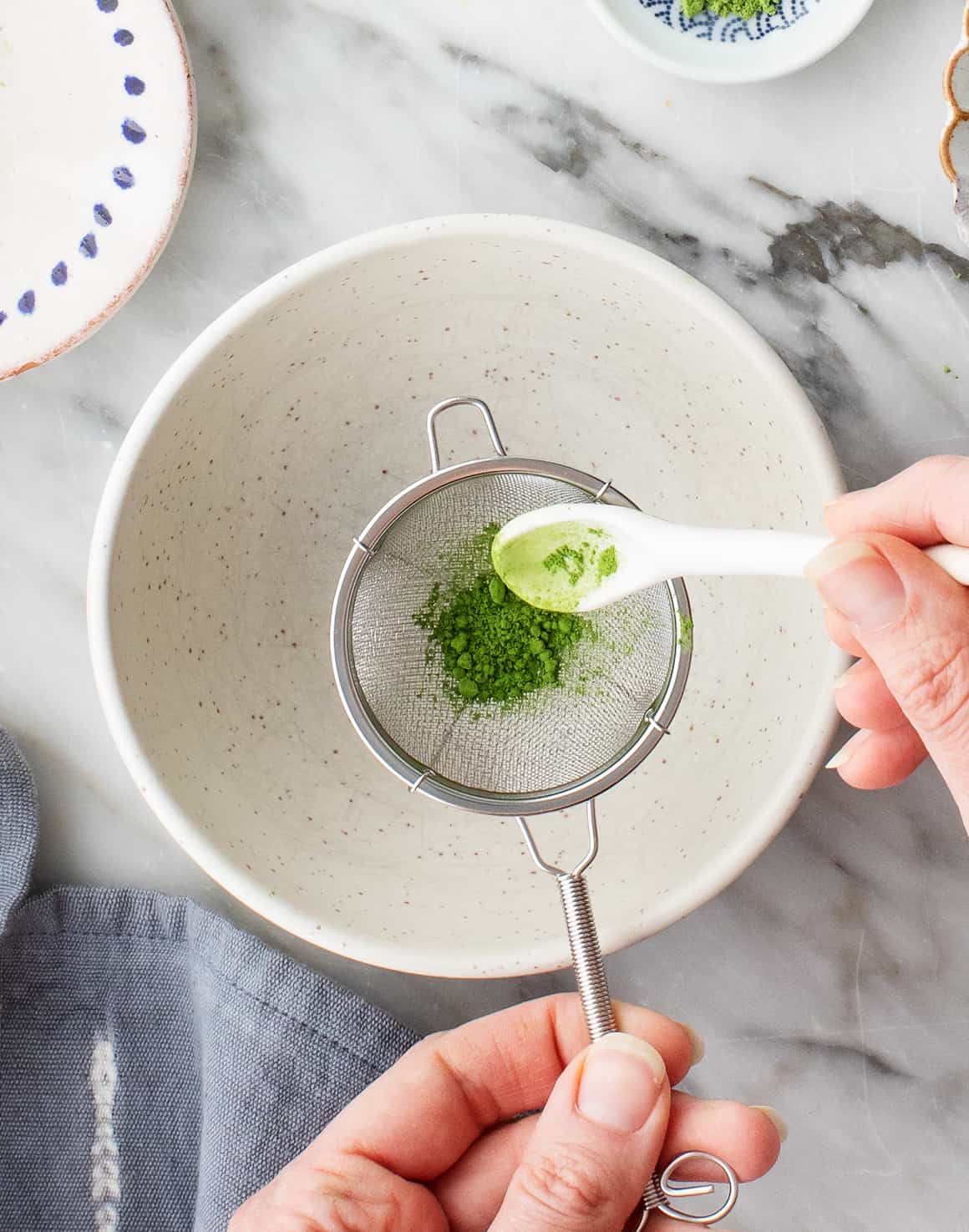
First, sift it into a small bowl or mug. Matcha clumps very easily, so I always recommend sifting it before you add any water. Otherwise, it will be difficult to get the tea to disperse evenly in the liquid, and your drink will be lumpy.
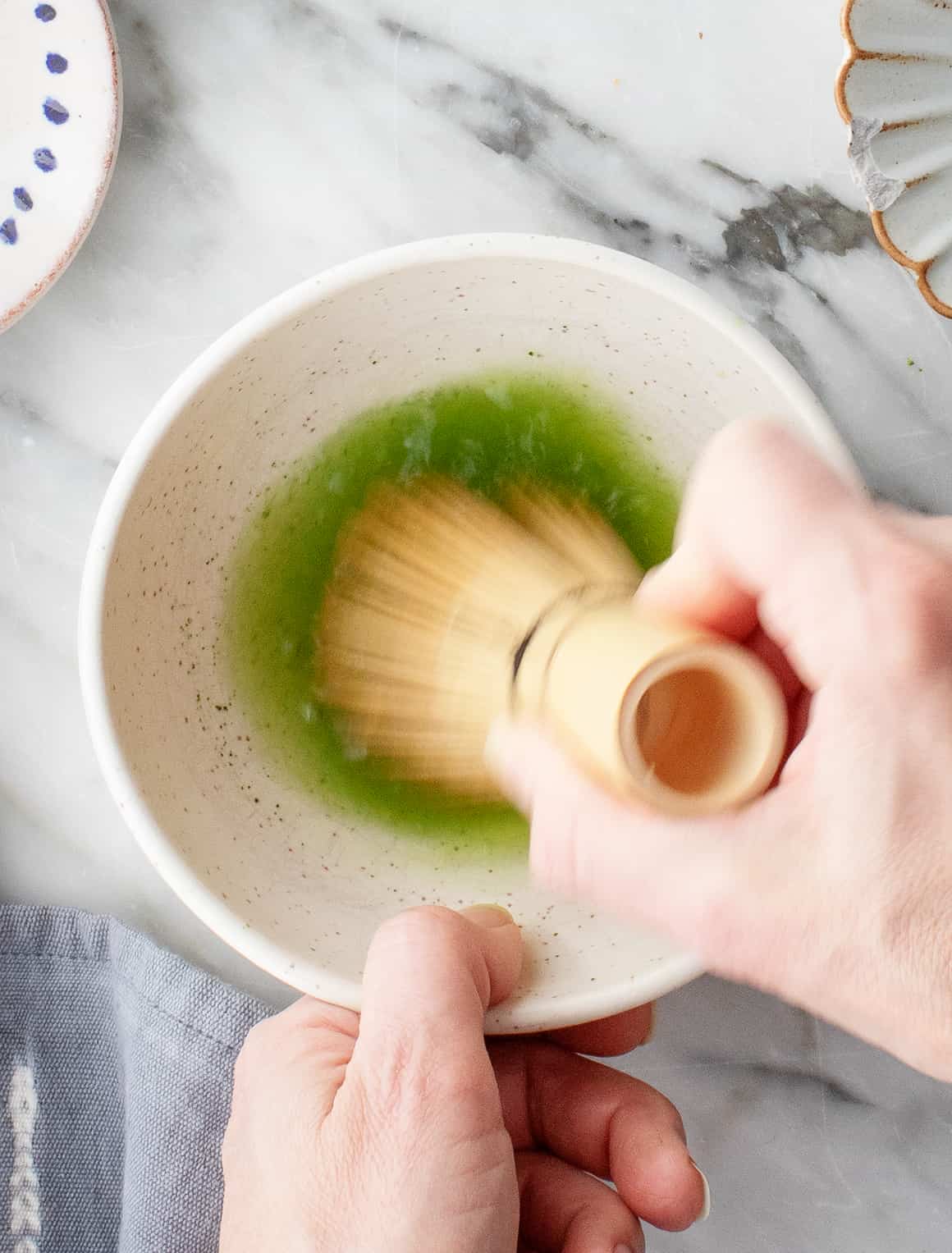
Then, pour in a small amount of hot water. You don’t want to use boiling water here, as it can scorch the green tea powder and make it bitter. Instead, aim for 175°F. I like to boil water in a tea kettle and let it cool for a few minutes before making tea.
Whisk the mixture to incorporate the matcha with the water. But wait! This isn’t the circular whisking required for making baking recipes or scrambled eggs. Instead, whisk vigorously from side to side—either directly back and forth or in a zigzag pattern—to evenly disperse the powder in the water and create a foamy layer on top.

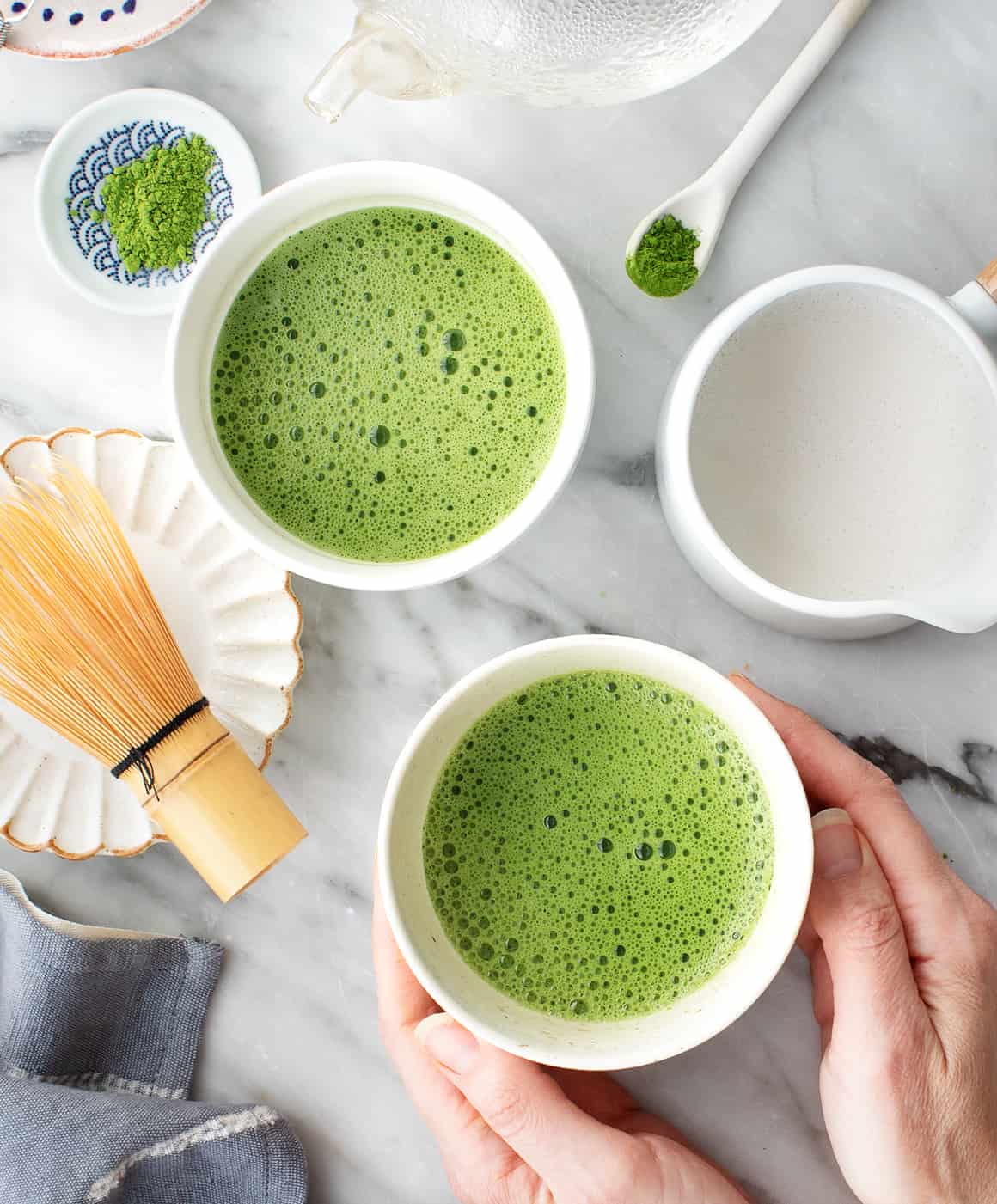
Finally, top it off with more hot water or steamed milk. Traditional matcha green tea is made with just green tea powder and water, but you can also easily make a matcha latte by finishing your drink with steamed milk. I love to make mine with almond milk, coconut milk, or homemade oat milk. Whisk again until foamy, sweeten to taste, and enjoy!
Equipment You’ll Need
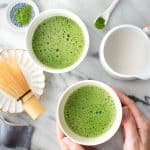
- Bamboo matcha whisk (chasen): This traditional bamboo whisk (pictured here) has a special design that breaks up clumps of matcha and creates a layer of froth on top of the tea. An electric milk frother is a good alternative. In a pinch, a small regular whisk can work too. Whisking or stirring with a fork or spoon will not work here.
- Tea bowl (chawan): A traditional matcha bowl is fairly wide and shallow, with a flat bottom that makes it easy to whisk the tea. If you don’t have one, any small bowl with enough space to whisk will work.
- Fine mesh strainer: Sifting the powder before adding water helps prevent clumps in the tea.
- Optional – bamboo scoop (chashaku): This is the traditional tool for measuring matcha tea, but it’s not necessary to buy one. Feel free to use a regular measuring spoon instead!
More Matcha Recipes to Try
How to Make Matcha
Equipment
- Bamboo Whisk (this is what I use for zero matcha chunks!)
- Small Bowl (a wide stoneware one is best)
- Fine Mesh Strainer (for sifting out clumps)
Ingredients
- ¼ teaspoon matcha powder
- 2 ounces hot water, 175°F is ideal
- 6 ounces additional hot water or steamed milk of choice, almond milk, oat milk, coconut milk, dairy milk, etc.
- Maple syrup, honey, or other sweetener, optional
Instructions
- Sift the matcha into a mug or small bowl to get rid of any lumps.
- Pour in the 2 ounces of the hot water. Using a matcha whisk or small regular whisk, whisk briskly from side to side until the matcha is fully dispersed and there is a foamy layer on top.
- Add the remaining 6 ounces hot water or steamed milk and whisk again until foamy. Sweeten to taste with maple syrup, honey, or your preferred sweetener, if desired.
This post contains affiliate links.













I noticed you used plant-based creamer. That is really important because any type of animal-based milk will bind catechins and minimize the health benefits. This may sound weird but I froth it into black coffee. They actually compliment each other if your palate can handle it.
Too diluted
Do you still use this brand of matcha? It’s coming up as $60-80 on Amazon
Hi Dana, they stopped carrying it on Amazon – it’s less directly from their website. Another brand I’ve loved is Dr. Weil’s on matcha.com, I wrote about it here: https://www.loveandlemons.com/iced-strawberry-matcha-latte/
Sorry to say but it’s too diluted – I halted the additional water or milk
Hi Dom, definitely feel free to adjust the ratios to your tastes! You could even increase the matcha powder if you’re a seasoned matcha drinker.
1/4 tsp is rarely recommended , you need at least a tsp or more
Easy way of explanation 👌
I love how organized and simple and easy it is to follow this recipe. I love how not only did you include the, how to make it, but the backstory of it to.
I just bought some.
I use 1 tsp into 8oz water.
Mix with a spoon – declumps easily.
And basically chug it.
Very easy. No need to cover the taste, whisk, milk, etc.
I love the way you acknowledge others about matcha i have no idea how to make it , and how it’s taste will be , but after reading this I more love matcha . I love it before reading the article because of matcha colour 💕
SUMPTUOUS and DELIGHTFUL…
I bought a matcha kit and this was very helpful as to how to make my matcha latte. Thanks…
Hi Suzy, so glad you enjoyed the post!
Super helpful
Simple, pure and straightforward. Thank you very much!
Hi so I’m new to making matcha and when reading Ipoddos recipe for their different matcha they usually use 1-2 full teaspoons of the matcha, and even less water. So would using only a 1/4 of a teaspoon and more water make it very diluted? Thanks for the recipe excited to try!
Hi Jessica, if you’re new to it start with 1/4 teaspoon – you can always whisk in more to make it stronger.
Absolutely love this matcha recipe. If you are interested in reading my blog ‘The Incredible Benefits of Matcha & Popular Matcha Products’.
Then visit https://www.foodforfoodies.co.uk/blogs/foodies-blog/the-incredible-benefits-of-matcha-popular-matcha-products
Oh great, i never heard about all benefits and also its recipe .i surly made Matcha tea .Because i’m very health conscious. i really like the way you describe it all.
I’m excited to making Matcha tea instead of my green tea or regular milk tea. i really like the way you describe it all.
How about making a cold drink, with either water(iced tea) or oat or almond milk, like an iced latte?
Hi, you might like our iced matcha latte recipe!
Try it even with Coconut milk and Pineapple juice.
It is amazing
So fortunate that after recently testing all the top matcha powders, the one you chose happened to the pm you’ve used for years!
How many cups of matcha are equal to drinking the regular stepped tea tea of 5-6 daily ?
Matcha, which is powdered green tea, packs more caffeine than other green teas. In detail, matcha has about 18.9 to 44.4 mg of caffeine per gram, while other green teas have between 11.3 and 24.67 mg per gram.
When you compare this to regular brewed teas like black or green tea, matcha comes out on top in caffeine content. Since one teaspoon of matcha weighs around 2 grams, you might get up to 88.8 mg of caffeine in just one serving. That’s way more than what you’d get from the same amount of regular steeped green tea.
So, if you’re looking at caffeine, having one or two cups of matcha could be like drinking five to six cups of regular green tea. This shows why matcha is such a good pick-me-up but also why it’s important to not have too much, especially if caffeine tends to affect you strongly.
I’m wanting to try Matcha instead of my usual black tea. Can I sweeten the Matcha with Stevia instead of honey?
Yeah, you can totally use stevia to sweeten your matcha instead of honey! Stevia is a great choice if you’re looking for something that doesn’t add calories or sugar.
When I switched from black tea to matcha, I liked using stevia because it didn’t add extra calories or sugar, which is great for people watching their sugar intake or following diabetic or keto diets. Just keep in mind that stevia is way sweeter than honey, so start small and add more to taste.
You can add stevia to your matcha the same way you would with any sweetener: mix it into the powder before adding water, or stir it into the prepared matcha. This way, you can enjoy your matcha’s energy and flavor, but with the sweetness you prefer and without the extra calories!